

The scaling problem: why programs lose momentum without warning – this is preventable when we lean into “Trust the Process,” our final element. You didn’t just launch this program yesterday. Perhaps you’ve been running it for months—maybe even years. The process has been refined, the feedback as been gathered, and you’ve made adjustments along the way. The data shows it works for some people.
But when you look at the numbers, when you’re honest about scalability, when you calculate ROI on all the time and resources you’ve invested—something isn’t adding up.
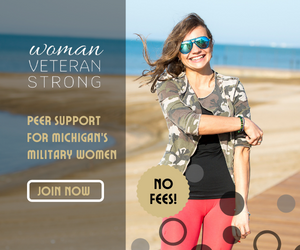
This is the uncomfortable position Autumn Hartpence and I found ourselves in with our Woman Veteran Strong program. We had proof of concept, success stories, and a support model backed by decades of research. What we didn’t have was the broad engagement we needed to justify the resources we were pouring in.
And here’s what Autumn’s 40-participant research study revealed: The problem wasn’t that our solution didn’t work. The problem was that we’d been forcing one solution onto people who needed something completely different.
In Episode 21 of Hardcore and At Ease, Autumn, an Air Force veteran completing her PhD, unpacked what her case study revealed about why programs stop scaling—and what it taught us about the final element of the T.A.R.G.E.T. methodology: Trust the Process.
When “Proven” Is Losing

Here’s the trap we fell into: We built something that genuinely works. Peer support groups are proven. The model has decades of research behind it. Women over 55 engage beautifully with the structure we created. We had testimonials, retention data, measurable outcomes.
But the average woman veteran is a decade younger than that. She’s raising toddlers, building a career, navigating a completely different life stage. And our proven solution? It was solving the wrong problem for the majority of people we were trying to reach.
“We weren’t wrong about peer support,” Autumn explained during our conversation. “We were wrong in thinking one model of peer support could serve everyone.”
This isn’t just about veteran programs. This is about every leader who’s watched a professional development track flatline after initial success. Every well-designed mentorship program where participation drops year over year. Every support system that works brilliantly for 20% of your population while the other 80% quietly opt out.
The uncomfortable truth: Sometimes your solution is excellent—and still insufficient.
The Assumptions We All Make

Without warning, we were facing the scaling problem of why programs lose momentum. We fell into the same trap we’d been trying to avoid! We’d worked so hard not to lump all people together, distinguishing unique needs and experiences for males vs females. We knew that treating everyone the same was a mistake other organizations were making.
And then we turned around and did exactly that—just with a different population.
“We were guilty of committing the same broad assumptions as everyone else in veteran care,” I admitted during the episode. “We distinguished women’s experiences from men’s experiences, but then we treated all women veterans as if they were the same.”
This pattern shows up everywhere in leadership. We tend to segment our market, identify our niche, develop our persona—and then optimize everything for that one persona. With refined messaging and practiced delivery, how can we go wrong? Especially when doubling down on what works for some people.
Yet often times, we completely miss that within our carefully defined segment, there are still wildly different needs, life stages, constraints, and definitions of success.
The woman who served 14 years and is now navigating corporate leadership? She has completely different needs than the woman who served four years a decade ago and has since built a business. The team member who’s been with you for six months needs something entirely different than the one who’s been there for six years—even if they’re in the same role.
What Low Engagement Is Really Telling You

Most leaders see declining engagement and immediately jump to execution problems, thinking, “We need better marketing,” or, “We need to make it easier to sign up.” It’s tempting to lean into the ideas that people just need to be reminded more often, or that the value proposition needs to be explained more clearly.
But what if the problem isn’t execution? What if people understand exactly what you’re offering—and they’re making a conscious choice that it doesn’t serve them?
“Even non-response is a response,” I told listeners during the episode. “When we actually ask the question and listen for the answer, we often get something completely unexpected.”
I shared a story about asking my five-year-old what scared him most about starting kindergarten. While I was prepared for concerns about making friends or being away from home, his answer certainly caught me off guard. I’d thought through how to address the separation anxiety, the social dynamics, the new routine.
His actual answer? He was terrified of using the computer mouse because he thought he would break it.
I was not prepared for that answer. And if I hadn’t asked—if I’d just assumed I knew what he needed and built my entire reassurance strategy around my assumptions—I would have completely missed what was actually keeping him up at night. We would have had a lovely conversation about making friends that did absolutely nothing to address his real fear.
That’s exactly what was happening with our program and why we were facing the scaling problem of programs losing momentum. We kept refining the delivery of a solution that only a subset of our population actually needed. We were having conversations about peer support and community connection with people who were actually afraid of something entirely different—or who had already found what they needed somewhere else.
The Research Behind the Scaling Problem

Autumn’s research didn’t just collect opinions. She conducted a systematic case study with 40 women veterans, spanning from those who served in 1974 to those who served in 2024. She interviewed women across 12 different conflicts, with service lengths ranging from two years to full careers. Some were married, some weren’t. Some had children, others didn’t. She kept the diversity intentional because she wanted to see the patterns.
And the patterns were clear: People weren’t rejecting support. They were rejecting that specific form of support because it didn’t match where they were in their journey.
Some had already closed that military chapter and found peace in a new identity. They’d moved on to being entrepreneurs, educators, mothers, mentors. The veteran identity was a component of their story—not the defining element. For them, a peer support group felt like going backward, not forward.
Others were in crisis and needed intensive clinical intervention, not peer conversations. A monthly meeting wasn’t going to address what they were facing. They needed professional help, and a well-meaning support group could actually delay them getting it.
And some were in a maintenance phase where occasional connection worked perfectly. They didn’t need weekly meetings or intensive community. They needed to know someone was there if they needed it—like a grandmother who sends five bucks in a card. Not pulling your car out of the ditch at 2 AM, but that quiet, consistent presence that says you matter.
All of those positions are valid. But we were treating them all the same.
The Spectrum of Need Framework

One of the most valuable insights from Autumn’s research is what we call the “spectrum of need.” Not everyone needs the same thing at the same time—even within the same population you’re serving.
The Needs of Your Team
Think about your team right now. Some people are functioning at a high level and just need occasional calibration. A quick check-in. A brief conversation to make sure they’re still aligned with the direction you’re heading. More support than that feels like micromanagement.
Others are struggling and need intensive support. Perhaps they need regular one-on-ones, or crystal-clear guidance. They need someone to help them think through the challenges they’re facing. Less support than that feels like abandonment.
And some have evolved past what you’re offering and are looking for something entirely different. They’re ready for stretch assignments, new challenges, different responsibilities. Your current structure feels confining rather than supporting.
Adjusting Your Leadership Skills
When you built your program, you probably designed it for one point on that spectrum. And it works beautifully—for people at that exact point. But what about everyone else?
“Everything they said they needed, Woman Veteran Strong already offers,” Autumn reflected during our conversation. “But I felt like if I got all these women in the room together, they would realize—do you really need saving? Because you’re fighting for somebody who’s like ‘I’m good. I found a way that works for me.'”
The insight that changed everything: We assumed the lack of engagement meant people weren’t getting support. The research showed many had already found support—just not through our program. They’d found art therapy, equine therapy, their faith communities, their careers, their families. They’d built lives that worked for them.
Our program wasn’t failing them. We were just insisting they needed something they’d already solved in a different way. We were facing the scaling problem of why programs lose momentum without warning.
When Trust the Process Means Questioning the Process
This episode explores the final element of the Hardcore and At Ease Framework: Trust the Process. It’s that outer white ring on the target visual, representing our faith in positive outcomes even when the path isn’t clear.
But here’s what most people get wrong about trusting the process: It’s not about stubbornly defending the “how.” It’s about staying absolutely committed to the “why” while being willing to completely reimagine the “how.”
I’ve done high-quality work. I know I have. I’ve poured everything into this—my time, my resources, my heart. I refuse to accept mediocrity. And still, the outcome I so deeply believed would happen wasn’t materializing.
That’s what kept me up at night. Not that we’d failed—but that we’d succeeded at building something excellent that still wasn’t enough.
When we stopped defending our single solution and started really listening to what Autumn’s 40 participants were telling us, we realized something critical: The mission wasn’t failing. The mission was expanding.
We didn’t need to fix what we’d built. We needed to build more.
“Our job as leaders isn’t to force everyone into the solutions we’ve already created,” Autumn emphasized. “It’s to recognize that the people we serve are at different places in their journey, with different needs, different constraints, and different definitions of success.”
This is what mature leadership looks like: Not the stubborn persistence we often mistake for commitment, but the wisdom to recognize when our proven solution needs to evolve into multiple solutions to truly serve the mission.
The Courage to Let Go of Being Right

“When we trust the process—when we maintain that long-term view and belief in the mission—we can actually let go of our ego,” I explained during the episode. “We can release our attachment to being right about the solution we designed and instead focus on finding the best solution, even if it looks nothing like what we originally built.”
This is the uncomfortable work of leadership. Admitting that something you built, something you’ve defended, something that does work—just doesn’t work for everyone. And having the courage to expand beyond it instead of doubling down on it.
Here’s what makes this so difficult: When you have proof of concept, when you have success stories, when you have data that shows your solution works—pivoting feels like admitting failure. It feels like all that time and effort was wasted. It feels like you were wrong.
But you weren’t wrong. You just weren’t complete.
The peer support model we built? It works beautifully. We’re not abandoning it. We’re recognizing that it serves one segment of our population exceptionally well—and we need different solutions for the other segments.
That’s not failure. That’s sophistication. And it’s how you beat the scaling problem around why programs lose momentum without warning.
What to Do This Week
Here’s your implementation challenge:
Look at one initiative where you’ve invested significant time but the results aren’t scaling. This could be a team meeting structure that people tune out of. A communication system nobody follows. A feedback process where participation has dropped. A training program with declining engagement.
Before you refine the execution or push harder on adoption, ask these three questions:
1. What problem was this designed to solve? Write down the specific pain point or gap you were addressing when you built this. Get clear on the original “why.”
2. Is that still the problem people are facing? Or have circumstances changed? Have people evolved past needing this? Are they dealing with something different now? Has your population shifted without you realizing it?
3. Who is this working for—and what do they have in common? Get specific about the subset of people who ARE engaging. That will tell you who you’re actually serving versus who you intended to serve. Look for patterns in life stage, experience level, personal circumstances, career goals.
The goal isn’t to abandon what’s working. It’s to recognize when you need multiple approaches instead of forcing everyone into one solution.
And here’s the hardest part: Be willing to hear that some people don’t need what you’re offering because they’ve already found their own solution. That’s not failure. That’s success—just not the success you designed.
The Mission Expands
That’s where trusting the process actually saved us. Because when we stopped defending our single solution and started really listening, we realized we weren’t failing—we were discovering that the mission was bigger than we initially understood.
We thought our mission was to get women into peer support groups. The actual mission was to help women veterans find the support that worked for where they were in their journey. For some, that’s peer support. For others, it’s something entirely different.
When you let go of being right about the “how,” you can actually serve the “why” at a much deeper level.
Autumn said something during our conversation that really stuck with me: “We all know that you got this, that you are a phenomenal woman, you are a strong, independent woman, but just know you don’t have to have it all. Your army of one doesn’t have to be one. You can lean on others, that it is okay, that you asking for help is not weakness.”
That applies to us as leaders too. We don’t have to have the one perfect solution that serves everyone; we can land on multiple solutions. Partnering with others who serve different segments is a great way to do this. We can recognize that serving our mission might mean building something that looks nothing like what we originally envisioned.
Get the Gear
This closing segment features the tools and resources that help me live Hardcore and At Ease while serving our mission.
When Autumn was conducting her case study, she wasn’t just collecting stories—she was systematically documenting patterns. Having a system for capturing what’s actually happening versus what we hoped would happen is critical for leaders who want to trust the process while staying grounded in reality.
I use a combination of Google Drive for organizing research and long-term documentation, and my Action Day Planner for tracking insights over time. My planner keeps me connected to the daily reality while Google Drive lets me see the patterns emerge over months. My newest Action Day Planner just arrived—it smells amazing and I can’t wait to prep it for the upcoming fiscal year. This system has been a game-changer for keeping framework elements balanced while staying honest about what’s actually working.
Want to dive deeper into the research? Read Autumn’s complete case study: “Invisible Ranks” to see how systematic research can challenge your assumptions and reveal what your people are actually telling you.
Resources & Links
Learn More:
- Hardcore and At Ease Framework: https://www.OthersOverSelf.com
- Personal Mission Statement Workshop: info@missionambition.org
- Book a Strategy Session: info@missionambition.org
Affiliate Disclaimer: I only recommend products I genuinely use. Full disclosure: https://othersoverself.com/affiliate-disclaimer/
Get the Gear:
- 📊 My Business Report: https://hardcore-and-at-ease.captivate.fm/biz-report
- 🎯 StoryBrand.ai: https://hardcore-and-at-ease.captivate.fm/storybrand-ai
- 📚 Business Made Simple: https://hardcore-and-at-ease.captivate.fm/bms
- 🚀 Flight School: https://hardcore-and-at-ease.captivate.fm/flight-school
- 📈 My Marketing Report: https://hardcore-and-at-ease.captivate.fm/marketing-report
Listen to the Full Episode
Autumn and I explore the uncomfortable theories behind identity, belonging, and what support actually looks like—plus the spectrum of need framework that can transform how you think about serving your people. You’ll hear about Social Identity Theory, Sense of Belonging Theory, and how these academic frameworks apply directly to the leadership challenges you’re facing right now.
Listen to Episode 21: “Stop Forcing the Fit: When High-Quality Work Doesn’t Get Results” on Apple Podcasts, Spotify, or at OthersOverSelf.com.
Join the Community
Subscribe to Hardcore and At Ease for weekly insights on keeping your edge without going over the edge. Connect with other mission-driven leaders at join.othersoverself.com.
Ready to explore how the Hardcore and At Ease Framework can transform your leadership? Book a discovery call at info@missionambition.org.
Meta Description: Your proven solution works—just not for everyone. Discover what to do when engagement plateaus and the numbers don’t add up.
Social Snippets:
→ “We weren’t wrong about peer support. We were wrong thinking one model could serve everyone.” The trap of the single solution.
→ Even non-response is a response. Before refining execution, ask what people are telling you by not engaging.
→ Trust the Process doesn’t mean defending your solution. It means staying committed to the “why” while reimagining the “how.”
→ Sometimes your solution is excellent—and still insufficient. The uncomfortable truth about proven programs that stop scaling.